
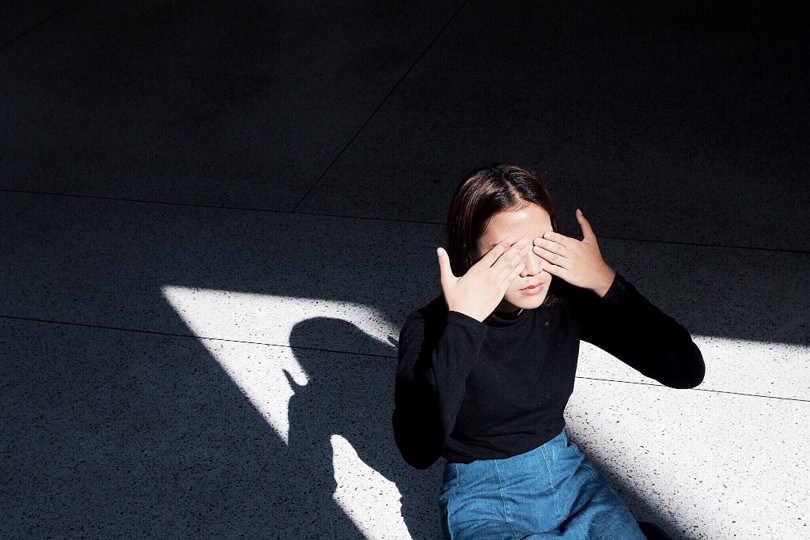
Most coaches care deeply about being ethical, reflective, and helpful. We train hard, we log CPD, we supervise our work. And still, there are moments when something quietly shapes our coaching without us realising it.
That “something” is often a blind spot.
Blind spots aren’t flaws. They’re the natural by-product of being human, experienced, and emotionally involved in relational work. Coaching supervision exists, in part, to help us notice what’s invisible from the inside.
This article explores what blind spots are, how they show up in coaching practice, and how supervision can work with them in a grounded, non-judgemental way.
What do we mean by “blind spots” in coaching?
In supervision, blind spots usually refer to unconscious patterns, assumptions, values, emotional triggers, and habits that shape how we work with clients without us being fully aware of them.
They might include:
Blind spots aren’t about incompetence. They’re about proximity. You are inside your own thinking, history, and emotional responses. Some things are simply easier for another person to notice.
Why blind spots are so hard to see
From the inside, your judgements feel reasonable, thoughtful, and grounded. That’s because much of your sense-making is driven by:
This is why blind spots don’t feel like blind spots. They feel like insight.
Supervision adds an external perspective that can gently widen the picture:
“This might be one way of seeing it; what else could be going on?”
How blind spots show up in everyday coaching
Blind spots often appear through patterns, not one-off moments. For example:
None of these are “wrong”. They’re signals. They’re information about how your internal world meets the coaching relationship.
The role of supervision: not fixing, but seeing
The purpose of supervision isn’t to correct you. It’s to expand your field of awareness so you can choose your responses more consciously.
Supervision helps by:
In this sense, supervision is less about answers and more about widening the lens.
Working with blind spots without getting defensive
Blind spot work can feel exposing. A helpful stance (for both supervisor and supervisee) is:
Curious, not critical.
Exploratory, not evaluative.
Useful reframes:
When blind spot work feels safe, it becomes developmental rather than threatening.
Practical supervision prompts
These questions can help surface blind spots gently and usefully:
To explore assumptions
To explore emotion
To explore patterns
To widen perspective
A simple supervision exercise: “Three lenses”
Bring a short client vignette to supervision and explore it through three lenses:
This exercise often reveals how quickly we settle on one “true” story, and how much choice opens up when we hold that story more lightly.
Ethical practice lives in awareness, not perfection
Ethical coaching isn’t about being bias-free or blind-spot-free. That’s not realistic.
It’s about being in relationship with your limitations:
Blind spots become risky when they’re unexamined.
They become developmental when they’re explored.
In closing
Your blind spots are not a problem to eliminate. They’re an invitation to deepen your practice.
Supervision doesn’t make you “better” by fixing you.
It makes you more spacious; more able to see, choose, and respond with intention.
And in relational work, that extra degree of awareness can change everything.
Executive Coach and Coach Supervisor Ian Coxan specialises in helping professionals navigate workplace challenges by transforming struggles into opportunities for growth. Through tailored coaching and practical strategies, Ian equips you with the tools to communicate effectively, manage conflict with ease, and thrive in any professional environment.

+ 4 more
Navigating Workplace Conversations with Confidence & Resilience
Excellent post Ian! This topic is not covered widely enough in coaching supervision articles and books and you have explained it all very well here, thank you. I like to think of what actually happens with our visual blind spot: you don’t see the gap, the background of what we can see around that blind spot just blends in and give the illusion that the blind spot isn’t even there…. You can test this with a piece of paper with a x drawn in the middle and a circle to one side. Look at the x and gradually bring the paper nearer and nearer to your face. At some point, the circle will magically disappear!