
Can modern enterprises continue with a purely profit-driven model that relies on relentless growth and views people as predictable components in a mechanical system?
I’ve been fascinated by organisations and workplaces since I was a child, watching my father throw himself into starting his own business. That fascination followed me to university, where a Psychology degree led me to Occupational Psychology — the discovery that psychology could be applied to the world of work.
For decades, that was enough. I loved talking to people about their jobs, working with teams, and thinking hard about leadership: what makes some people brilliant at leading others, while others struggle? I was fortunate to work mostly with good organisations doing genuinely useful things, using language like “Vision,” “Mission,” “Strategy” and “Values” to help people align around a shared purpose.
Nowadays, I need more.
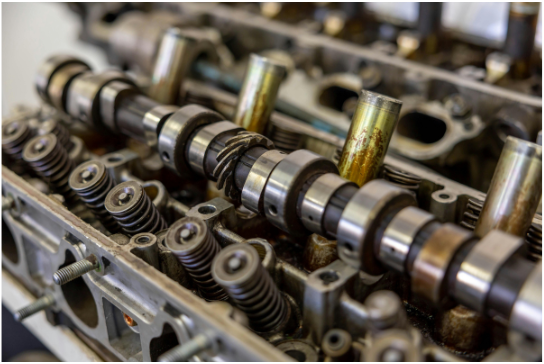
With 35 years of consulting experience behind me, I’m not abandoning my beliefs so much as deepening them. It’s no longer enough to work within a “business as usual” worldview — one that privileges profit above everything else, treats infinite growth as normal, and views people and organisations as mechanistic systems that simply need the right rational plan.
None of that reflects reality. We are not machines. Growth cannot continue forever — no law of Physics or Biology allows it. And we’re seeing the costs of pretending otherwise everywhere: climate breakdown, system overwhelm, epidemics of depression, anxiety and loneliness. I hear this constantly from clients and fellow Executive Coaches — good, smart, committed people simply reaching their limit, expected to be “on” for sixteen hours a day when our bodies were never built for that.
Organisations, at their core, are just groups of people organised around a purpose. So what would it look like if that purpose were recalibrated — if “doing good in the world,” protecting the health of people and planet, became the priority that products and services flowed from, rather than an afterthought?
That might sound idealistic. It shouldn’t.
Nature is now on the balance sheet for many forward-looking businesses. Organisations are being asked to work toward Net Zero. Serious financial markets have long recognised that nature has value.
Our Earth isn’t a machine built for ever-increasing efficiency. It’s an entangled web of living beings and symbiotic relationships that scientists are still only beginning to understand. We could not exist without it.
I’m learning from the businesspeople, social entrepreneurs, policymakers, academics and scientists already viewing the world this way. I’m inspired by the conversations I’m now having with organisational leaders, who too are questioning if there’s not ‘a better way’.
Wendy Robinson is a Chartered Psychologist and an Accredited Executive Coach and an Accredited Coach Supervisor. She works with leaders globally consulting across diverse organisational sectors, providing a confidential, empathetic, and reflective space for executives navigating complex challenges, purpose-driven leadership, and systemic workplace crises. Known for her grounded approach combining wisdom and humanity, Wendy supports leaders aiming to drive meaningful change and foster workplace resilience.
+ 3 more
Helping leaders navigate turbulent times to find meaning, purpose, and their voice
This makes some very solid points!
Thanks Jackie, and more to come in subsequent Blogs 🙂